Cables, battery interconnection and protection must be confirmed by an engineer, so they are not included in the price.
The upper limit is 16 LB-16D-G3 batteries in parallel (up to 256 kWh, per Hoymiles). An engineer will confirm how many batteries the inverter power and your load need.
One LB-16D-G3 delivers 157 A continuously — about 8 kW. To draw ≈15 kW from batteries without the grid or sun, you need two batteries (the inverter draws up to 300 A).
Compatibility per Hoymiles data: HIS-G3 REV1.7 / HIT-5-20L-G3 V1.0 datasheets (battery 40–60 V, CAN communication) and LB-16D-G3 REV1.6.
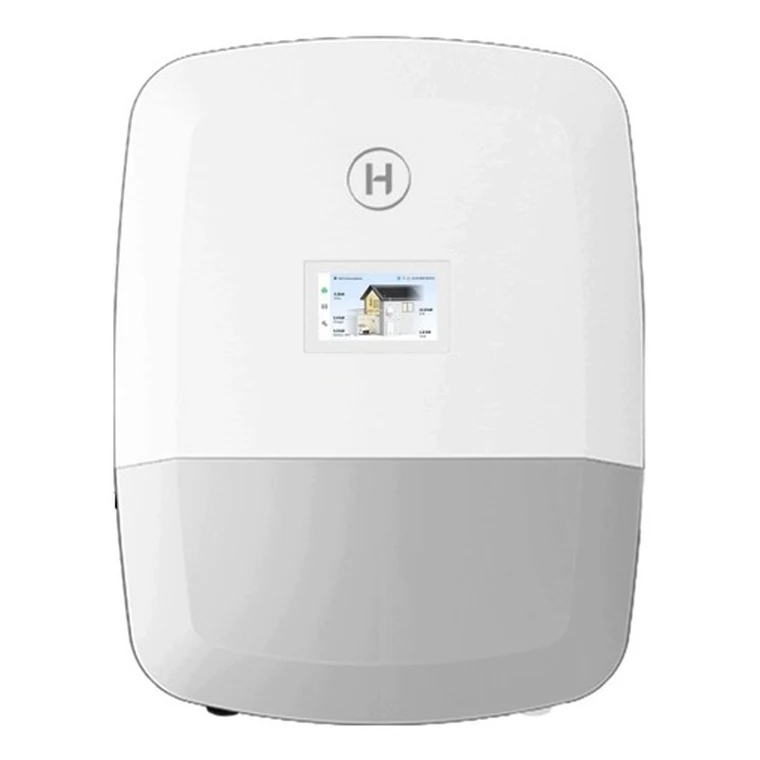
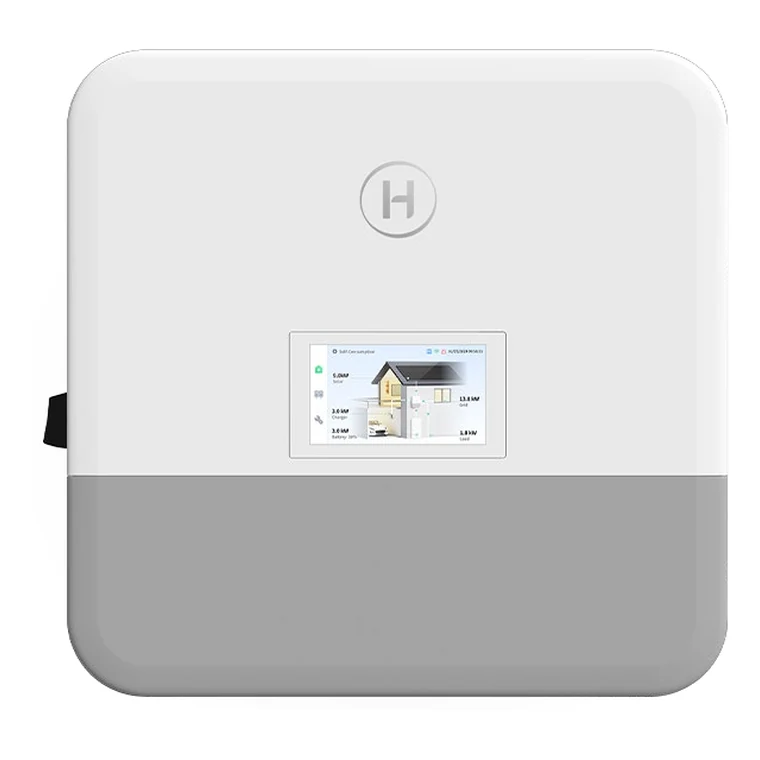
Hoymiles HIT-15L-G3S is a 15 kW three-phase hybrid inverter for a 380/400 V grid, solar panels and 48 V low-voltage batteries (40–60 V range) with charge and discharge current up to 300 A. It suits a large house with a three-phase supply. Phase loads can be unbalanced: up to 50% of rated power on one phase. The G3S version has an LCD screen; it can also be controlled via an app.
It accepts up to 30 kW of solar panels on 4 MPPT trackers (up to 20 A each, PV voltage up to 1000 V). The back-up output delivers 15 kW continuously and, with sufficient PV and battery power, up to 30 kVA for 10 s; switchover to back-up takes under 10 ms. IP66 housing, operating temperature -25…+65 °C, weight 41 kg. It supports a generator, heat pump, time-of-use schedules and peak shaving, and up to 10 inverters in parallel.
Features
Solar panels up to 30 kW, 4 MPPTs
Battery 40–60 V, current up to 300 A
Unbalanced load up to 50% per phase
Peak power 30 kVA (10 s)
Back-up switchover under 10 ms
LCD screen and app
IP66, -25…+65 °C
Up to 10 inverters in parallel
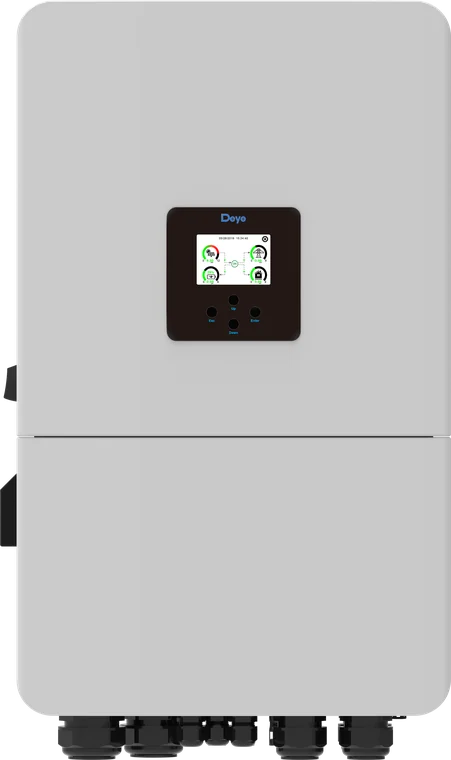
Hoymiles HIT-15L-G3S vs Deye SUN-15K-SG05LP3-EU-SM2: comparison
A comparison with the Deye inverter of the same power, which is also in our catalogue. The better value is shown in bold.
Hoymiles HIT-15L-G3S vs Deye SUN-15K-SG05LP3-EU-SM2: comparison
Parameter
Hoymiles HIT-15L-G3S
Deye SUN-15K-SG05LP3-EU-SM2
Rated power
15 kW
15 kW
Back-up output peak power
30 kVA, 10 s
2× rated (30 kW), 10 s
Number of MPPTs
4 (up to 20 A each)
2 (up to 36 A each)
Solar panels
up to 30 kW
up to 30 kW
Max. PV voltage
1000 V
800 V
MPPT range
150–900 V
160–650 V
Battery voltage
40–60 V
40–60 V
Max. battery charge / discharge current
300 A
280 A
Pass-through current (grid → load)
50 A
70 A
Max. efficiency
98.5 %
97.6 %
European efficiency
98.0 %
97.0 %
Protection rating
IP66
IP65
Operating temperature
−25…+65 °C
−40…+60 °C
Dimensions (W × H × D)
539 × 696 × 232 mm
456 × 750 × 268.5 mm
Weight
41 kg
51.9 kg
What this means in practice
4 MPPTs instead of 2: easier to split panels across roofs facing different directions (east, west, south) without losses on a shared tracker.
PV up to 1000 V and a 150–900 V MPPT range: longer strings, lower current and thinner cables from the panels.
98.5 % vs 97.6 % efficiency: less energy lost in conversion.
IP66 vs IP65: better protection against dust and water.
Deye advantages: 70 A vs 50 A pass-through current and operation from −40 °C (Hoymiles from −25 °C).
Which batteries are compatible with this inverter?
48 V low-voltage batteries (40–60 V range): lithium-ion with a BMS that communicates with the inverter over CAN, or lead-acid. The matching Hoymiles battery is the 16 kWh LB-16D-G3. The inverter can draw up to 300 A from batteries, while one LB-16D-G3 delivers 157 A continuously (about 8 kW), so several modules in parallel are needed for the full 15 kW from batteries.
Can solar panels be connected later?
Yes. The inverter can run with just the grid and a battery, and up to 30 kW of panels on 4 MPPTs can be added later.
Can single-phase appliances be powered if the phase loads differ?
Yes. The inverter supports unbalanced loads — up to 50% of rated power, i.e. up to 7.5 kW, on one phase.
What is included in the price?
The price is for the equipment, excl. VAT. Cables, switchgear, protection, installation and setup are calculated after a site visit or from a photo of the distribution board.
[→] — Request
Tell us about your property
We will select the configuration, check compatibility and calculate the cost with installation.
Photos of the distribution board, a list of appliances or a roof plan are easier to send by e-mail. Planning an installation? Fill in the technical brief — for a home or a business.