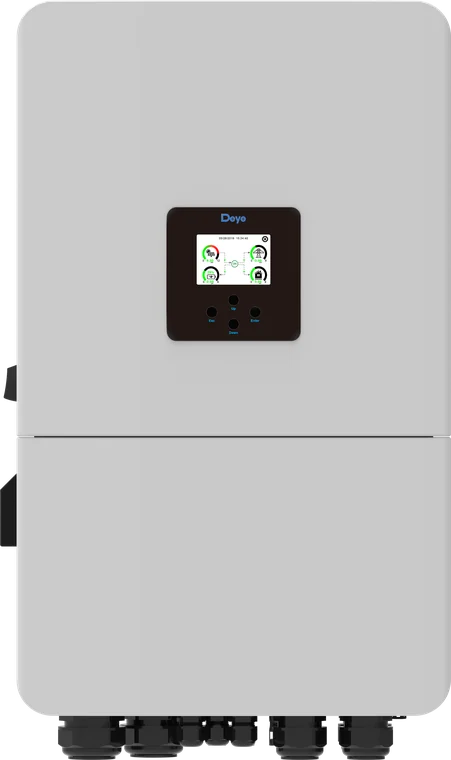
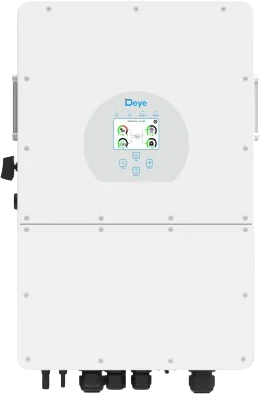
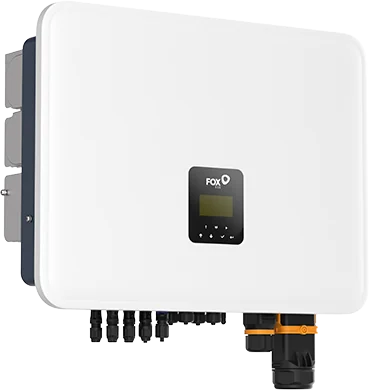
Noise. Deye 15K LV is the loudest on paper (<60 dB). Deye 20K HV (≤55 dB) and Fox P3-15.0-SH (<55 dB) are practically equal. All three are fan-cooled.
One phase at 6–8 kW without grid. Per Deye's datasheet the 20K HV delivers up to 35 A per phase (≈8 kW). The Deye 15K LV — up to 7.5 kW. Fox declares EPS of ≈5 kVA per phase; unbalanced load is not mentioned in its datasheet.
Battery. At 8 kW the Deye 15K LV draws ≈165–175 A from a 48 V battery; the HV models draw 27–28 A. Choose the battery for that current.
Weight. Deye 20K HV — 30.5 kg, Fox — 34 kg, Deye 15K LV — 51.9 kg.
Warranty. Fox — 10 years per datasheet; Deye — 5 years, up to 10 depending on the country of installation.
[03] — Specifications
Technical specifications
Technical specifications
Parameter
Deye 15K LV
Deye 20K HV
Fox P3-15.0-SH
AC output
Rated AC power
15 kW
20 kW
15 kW
Max. apparent power
16.5 kVA
22 kVA
16.5 kVA
Max. AC current per phase (output)
24 A
31.9 A
25 A
Backup power (off-grid / EPS)
15 kW
20 kW
15 kVA
Peak power in backup
2× (30 kW), 10 s
1.5× (30 kW), 10 s
no overload above 15 kVA
Max. load on one phase (unbalanced)
up to 50 % of rated power per phase ≈ 7.5 kW
35 A ≈ 8 kW ¹
not declared; EPS 21.7 A ≈ 5 kVA ²
Grid → load passthrough
70 A
80 A
not declared
Backup switchover time
not stated
not stated
<20 ms (datasheet)
Battery
Battery type and voltage
48 V (LV): 40–60 V
HV: 160–700 V
HV: 100–800 V
Max. charge / discharge current
280 A
37 A
50 A
Battery inputs
2
1
1
BMS communication
RS485 / CAN
RS485 / CAN
CAN
Solar panels (PV)
Max. PV input power
24 kW
32 kW
22.5 kW
Max. PV array power
30 kW
40 kW
30 kW
MPPT / strings
2 / 2+2
2 / 2+2
3 / 1+1+1
MPPT range
160–650 V
150–850 V
120–950 V
Max. PV voltage
800 V
1,000 V
1,000 V
Max. PV operating current (per MPPT)
36+36 A
26+26 A
3 × 20 A
Efficiency
Max. / European efficiency
97,6 / 97,0 %
97,6 / 97,0 %
97,9 / 97,2 %
General
Dimensions (W×H×D)
456×750×268.5 mm
408×638×237 mm
600×450×226 mm
Weight
51.9 kg
30.5 kg
34 kg
Cooling
fan
fan
fan
Noise level
<60 dB
≤55 dB
<55 dB
Ingress protection
IP65
IP65
IP65
Operating temperature
−40…+60 °C
−40…+60 °C
−25…+60 °C
Warranty
5 years (up to 10)
5 years (up to 10)
10 years*
¹ Per the Deye SUN-5…25K-SG01HP3 datasheet (December 2023): “Max. Three-phase Unbalanced Output Current” — 35 A for the 20K. The current table on the manufacturer's site does not list this row — confirm when ordering.
² Fox: EPS mode — 21.7 A per phase (≈5 kVA); unbalanced load is not described in the datasheet, we are clarifying with the manufacturer.
* Fox warranty is per datasheet; terms in Ukraine are to be confirmed with the importer. Deye — 5 years, up to 10 depending on the country of installation.
[04] — Noise
Noise and cooling
Noise and cooling
Parameter
Deye 15K LV
Deye 20K HV
Fox P3-15.0-SH
Noise level (datasheet)
<60 dB
≤55 dB
<55 dB
Cooling
fan
fan
fan
Standby consumption
not stated
not stated
20–25 W
Difference from the quietest
≈5 dB
0 dB
0 dB
How many times louder (estimate)
≈1,4×
1×
1×
These are upper limits at maximum load; manufacturers do not state the measurement conditions (distance). At 6–8 kW (30–53 % of rated power) the fan most likely runs at medium speed, but no separate measurements exist.
For a rough estimate: +10 dB sounds about twice as loud, so 5 dB is ≈1.4×. All three inverters use fans: install them in a utility room, garage or under a canopy (IP65), not behind a bedroom wall.
[05] — Load
Operation at a 6–8 kW load
We show how each inverter behaves at 6 and 8 kW — a typical evening load of a house with a boiler or an electric stove.
Operation at a 6–8 kW load
Parameter
Deye 15K LV
Deye 20K HV
Fox P3-15.0-SH
Load 6 kW
Load as % of rated power
40 %
30 %
40 %
Battery current (estimate; in brackets — share of max. current)
123 A (44 %)
21 A (56 %)
20 A (40 %)
Min. battery voltage for this load (estimate)
—
167 V
124 V
Entire load on one phase, no grid
OK
OK ¹
over the limit ²
Starting headroom (pump, compressor) above the load
+24 kW
+24 kW
+9 kVA
Load 8 kW
Load as % of rated power
53 %
40 %
53 %
Battery current (estimate; in brackets — share of max. current)
164 A (59 %)
27 A (74 %)
27 A (53 %)
Min. battery voltage for this load (estimate)
—
223 V
165 V
Entire load on one phase, no grid
over the limit
at the limit ¹
over the limit ²
Starting headroom (pump, compressor) above the load
+22 kW
+22 kW
+7 kVA
Three phases evenly (2–2.7 kW per phase). All three inverters work in the high-efficiency zone; the limits do not interfere.
One phase without grid. Deye 20K HV handles 6–8 kW (8 kW is at the limit). Deye 15K LV — up to 7.5 kW. Fox, by its EPS current — ≈5 kVA per phase².
Battery. At 8 kW the Deye 15K LV draws ≈165–175 A at 48 V — you need a battery and BMS rated for that current, and thick short cables. The HV models draw tens of amps.
Pump start. Deye holds a 30 kW peak for 10 s (+22 kW headroom at 8 kW). Fox does not declare overload above 15 kVA: +7 kVA headroom.
Calculation assumptions: phase voltage 230 V; battery voltage — 51.2 V (LV), 300 V (Deye 20K HV), 310 V (Fox); battery-to-AC efficiency — 95 % (LV) and 97 % (HV). These are estimates, not manufacturer data: actual values depend on the battery and settings.
[06] — Choice
Which one to choose
Your situation
What fits
You have or plan 48 V batteries
Deye 15K LV (needs a battery and cables for hundreds of amps)
HV battery and one phase of 6–8 kW in backup
Deye 20K HV (8 kW is at the limit)
Lowest weight and size needed
Deye 20K HV — 30.5 kg, 408×638×237 mm
Three MPPTs, 97.9 % efficiency and a 10-year warranty per the datasheet
Fox ESS P3-15.0-SH (EPS per phase — being clarified)
[07] — Questions
Questions and answers
Which of these inverters is the quietest?
Per the datasheets, the Deye 20K HV (≤55 dB) and Fox ESS P3-15.0-SH (<55 dB) are on the same level; the Deye 15K LV is up to 60 dB. All three are fan-cooled, so install them in a utility room.
Can the inverter carry 8 kW on a single phase during a blackout?
Deye 20K HV — yes, at the limit: up to 35 A per phase (≈8 kW) per datasheet. Deye 15K LV — up to 7.5 kW per phase, so 8 kW is already an overload. For the Fox P3-15.0-SH, EPS is declared at 21.7 A per phase (≈5 kVA); unbalanced load is not mentioned in the datasheet — we are clarifying with the manufacturer. If the load is spread over three phases, these limits do not matter.
What is the difference between LV and HV inverters?
An LV inverter (Deye 15K) works with 48 V batteries and draws a large current — up to 280 A: you need thick cables and a battery that can deliver it. HV inverters (Deye 20K, Fox) work with 100–800 V batteries; at 6–8 kW the battery current is tens of amps.
What warranty do these inverters have?
Deye — 5 years, up to 10 depending on the country of installation (Deye terms). Fox — 10 years per datasheet; terms in Ukraine are confirmed with the importer.
Where does the data on this page come from?
From Deye's current technical tables (deyeinverter.com), the Deye SG01HP3 datasheet (December 2023) and the Fox ESS H3-Smart datasheet. Calculated values are our estimates with the stated assumptions. We will prepare a calculation for your site.
Data sources
Data as of 9 October 2026. Check the parameters for your site before designing.
Photos of the distribution board, a list of appliances or a roof plan are easier to send by e-mail. Planning an installation? Fill in the technical brief — for a home or a business.