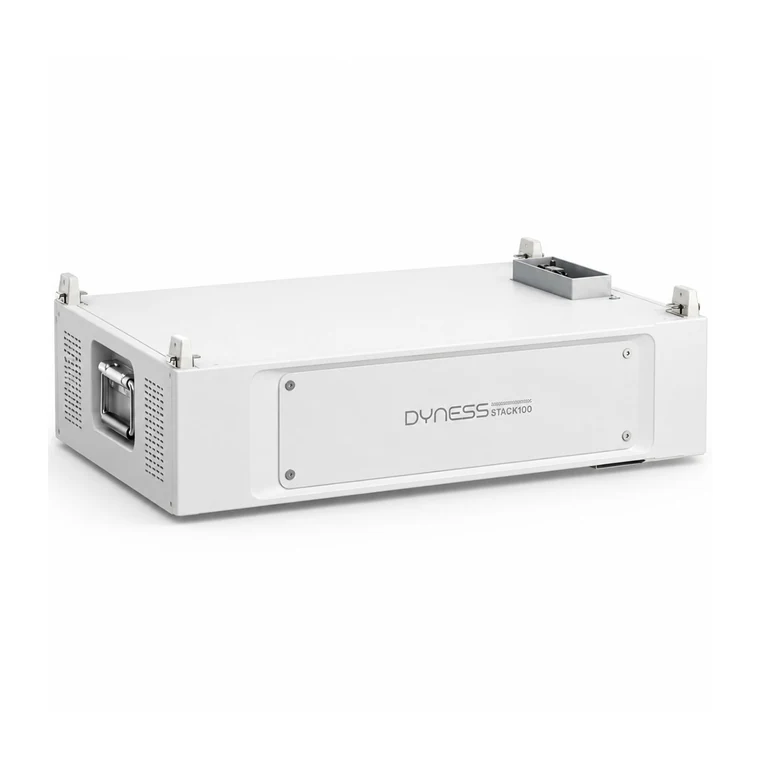
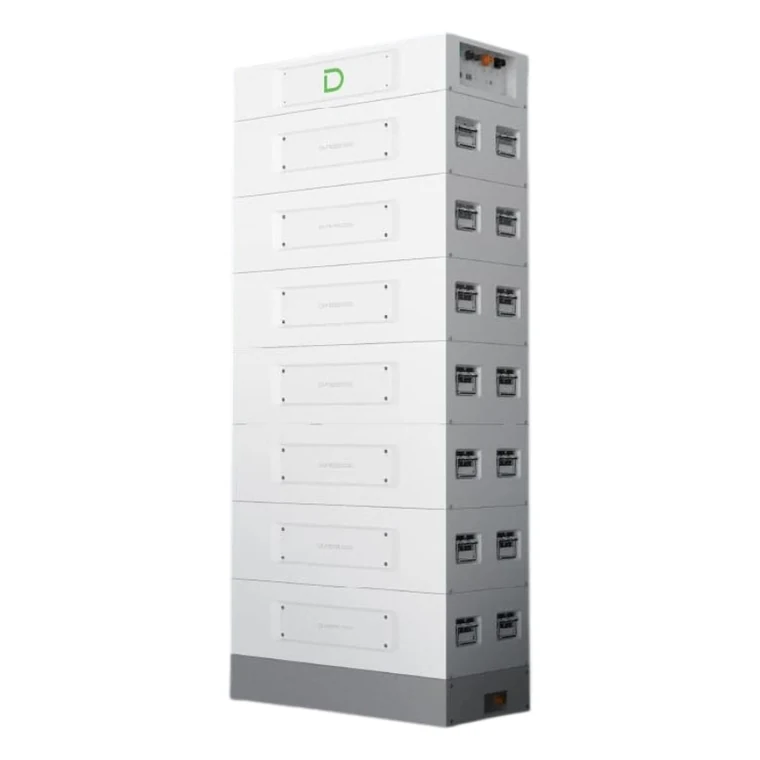
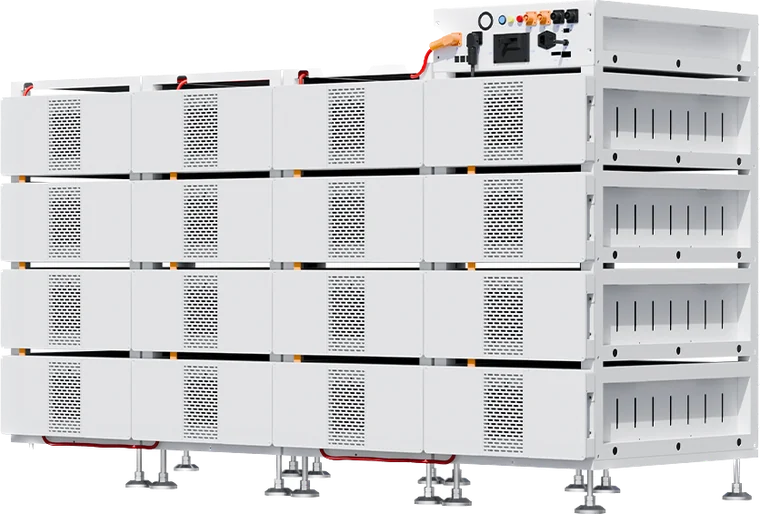
Dyness Stack314 is a LiFePO₄ high-voltage energy storage system for small commercial and industrial sites: shops, warehouses, production sites, farms and office buildings. The S51314 is its battery module: 51.2 V, 314 Ah, 16.08 kWh. Modules are stacked on top of each other without a rack and connect plug-and-play: 3 to 15 modules in series per SBDU200 control unit give 48.2–241.1 kWh and 134.4–864 V. Up to 12 such clusters can be connected in parallel, up to 2.89 MWh.
Recommended current is 140 A (0.45C), maximum 200 A (0.64C), depth of discharge 95%, cycle life 8000+ cycles. Every module has a built-in aerosol fire extinguisher that, according to the manufacturer, eliminates a fire threat within 5 seconds. The heated control unit allows operation from −20 to +55 °C. The IP20 enclosure with forced-air cooling is for a dry utility room. The module works only as part of a Dyness Stack314 system: 3 to 15 modules in series per SBDU200 control unit with base. For the Deye SUN-125K-SG02HP3 hybrid inverter (160–1000 V battery input) the minimum is 4 modules per cluster. We confirm the configuration and inverter compatibility before ordering.
Features
16.08 kWh, 51.2 V, 314 Ah (LiFePO₄)
Cluster: 3–15 modules, 48.2–241.1 kWh, 134.4–864 V
140 A recommended, up to 200 A maximum
Rack-free plug-and-play stacking
Built-in aerosol fire extinguisher in every module
Operation from −20 to +55 °C with the heated control unit
Up to 12 clusters in parallel, up to 2.89 MWh
95% depth of discharge, ≥ 8000 cycles
CAN and RS485 interfaces
Technical specifications
Battery type
LiFePO₄
Module energy, kWh
16.08 (usable 15.27 at 95% DoD)
Module nominal voltage, V
51.2
Module capacity, Ah
314
Charge / discharge current, A
140 recommended (0.45C), 200 max. (0.64C)
Module max. power, kW
10.24 (recommended 7.17)
Modules per cluster
3–15 in series
Cluster operating voltage, V
134.4–864
Cluster energy, kWh
48.2–241.1
Depth of discharge
95%
Cycle life
≥ 8000 cycles (0.2C, 25 °C, 95% DoD, to 70% capacity)
Operating temperature
charge −20…+55 °C (heated), discharge −20…+55 °C
Cooling
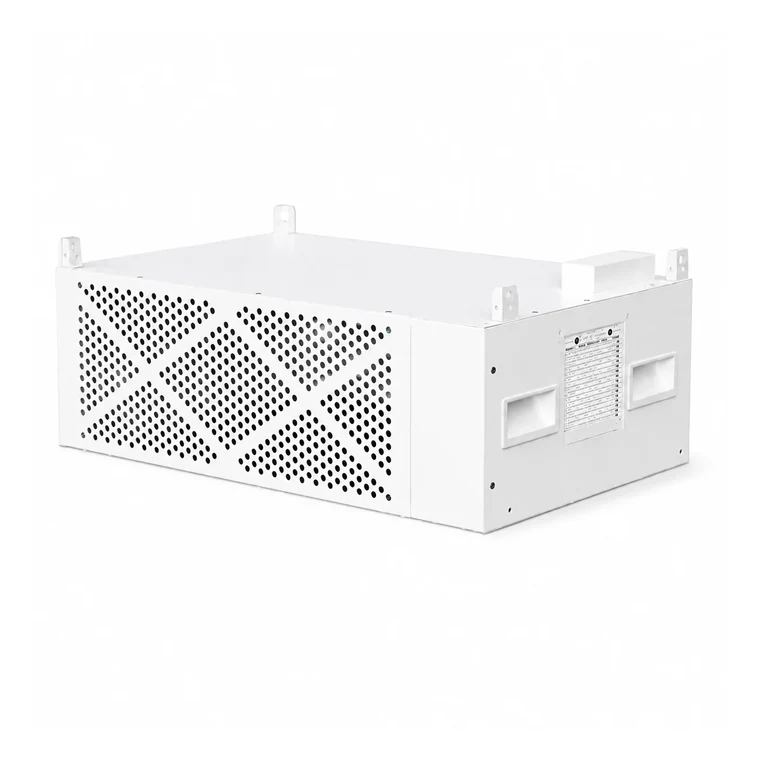
forced air
Fire suppression
built-in aerosol fire extinguisher
Scalability
up to 12 clusters in parallel, up to 2.89 MWh
Communication
CAN, RS485
Protection rating
IP20
Module dimensions (W×D×H), mm
770×425×230
Module weight, kg
114–115
Cluster weight, kg
38 + 114 × number of modules
Stack installation
Note: an S51314 module weighs over 110 kg. A stack of 7–8 modules is over 2 m tall and must be anchored to a wall or split into parallel racks; an engineer checks the permissible floor load before installation.
System also needs
Dyness SBDU200 control unit with base (1 per cluster)
Dyness data (STACK314 datasheet) and supplier data. 51.2 V is the voltage of one module; a high-voltage system takes at least 3 modules in series with an SBDU200 control unit and base (sold separately). The price is per module.
No. 51.2 V is the voltage of one module, and Stack314 is a high-voltage system: 3 to 15 modules in series (48.2–241.1 kWh) per SBDU200 control unit with base. The Deye SUN-125K-SG02HP3 inverter needs at least 4 modules. The price on the site is per module.
Which inverters does it work with?
The module works only as part of a Dyness Stack314 system: 3 to 15 modules in series per SBDU200 control unit with base. For the Deye SUN-125K-SG02HP3 hybrid inverter (160–1000 V battery input) the minimum is 4 modules per cluster. We confirm the configuration and inverter compatibility before ordering.
How much energy is actually available?
The manufacturer specifies 95% depth of discharge: a module gives about 15.3 kWh of usable energy, an 8-module cluster about 122 kWh, a 15-module cluster about 229 kWh. Runtime depends on the load, so we calculate it for your site.
What is included in the price?
The price is for the equipment, excl. VAT. Cables, switchgear, protection, installation and setup are calculated after a site visit or from a photo of the distribution board.
[→] — Request
Tell us about your property
We will select the configuration, check compatibility and calculate the cost with installation.
Photos of the distribution board, a list of appliances or a roof plan are easier to send by e-mail. Planning an installation? Fill in the technical brief — for a home or a business.